
Skip to content

Written quotesLocal technicians

Opener repair in St. Louis, MO

Garage door opener repair in St. Louis, including smart openers

When the opener hums, stalls or ignores the remote, we work out whether the fault is in the opener or the door before anything is replaced.

(314) 555-0112 Call for garage door help
  • Chain, belt and screw drive openers
  • Smart opener and battery backup setup
  • Written quote before work starts
Get my free garage door quote

Step 1 of 3

What do you need?

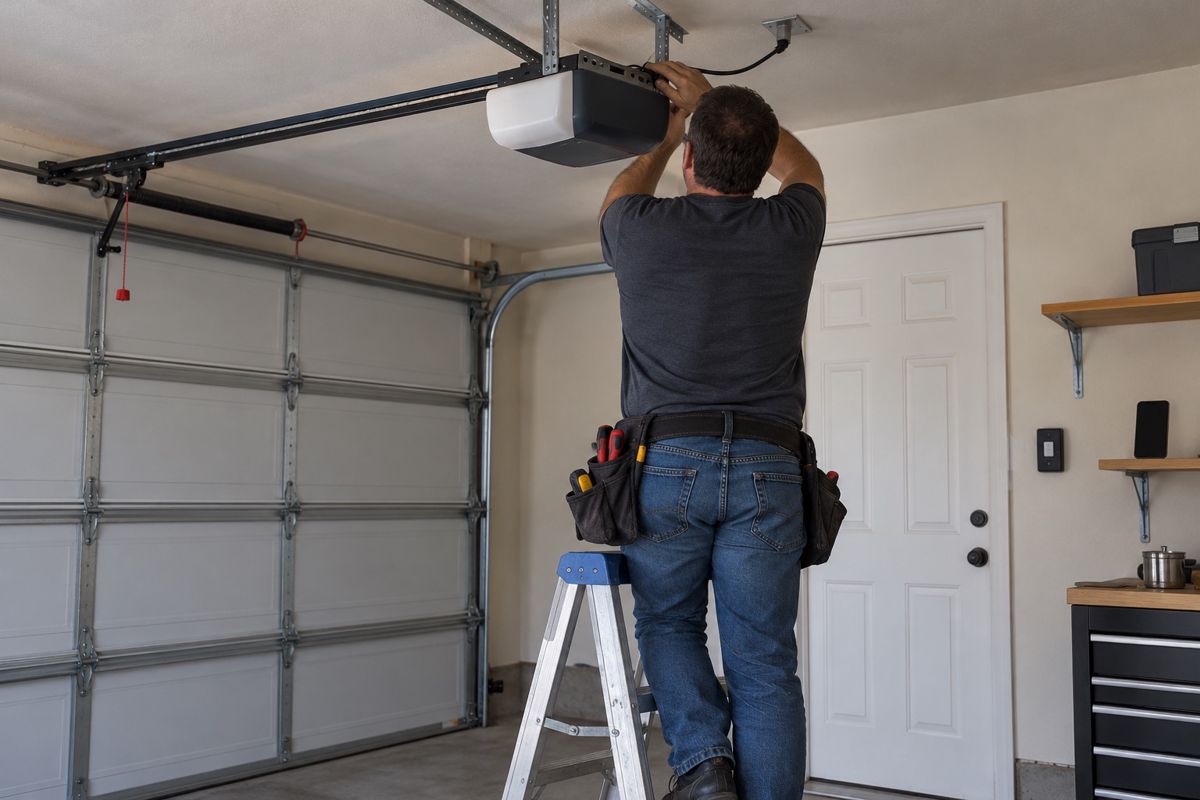
Technician from behind installing a belt-drive opener in a garage

What goes wrong with a garage door opener?

Openers fail in a few familiar ways. The motor hums but the door does not move. The remote works from the driveway but not from the street, or stops working altogether. The door starts to close and then reverses. The light blinks or the unit clicks without doing anything. The door goes partway and stops.

Each of these has more than one cause. A worn gear inside the motor housing, a failed circuit board, a dead remote battery, a travel setting that has drifted, and a misaligned safety sensor can all look alike from the garage floor. The first job of a visit is to work out which one it is.

Many opener problems are really door problems. A broken spring or a binding roller makes the opener work too hard, and it fails from the strain. Replacing the opener without fixing the door only brings the same fault back.

Is it the opener or the door?

There are a few safe checks you can make before you call. Replace the remote's battery. Look at the wall button and check that the opener is plugged in and the outlet has power. Wipe the lenses of the two photo-eye sensors near the floor on each side of the door and make sure neither one has been knocked out of line. A blinking light on the opener often points to those sensors.

That is where the home checks stop. If the door feels heavy, sits crooked, or you hear a bang, the problem is likely a broken spring or a cable, and the opener is not the cause. Do not touch springs, cables or the brackets at the bottom of the door.

A technician will test the opener with the door disconnected, check the balance of the door by hand, and then tell you whether the repair belongs to the opener, the door, or both.

Should I repair or replace my opener?

A repair makes sense when the fault is a single part, the motor is still strong, and parts are available. A replacement tends to make more sense when the unit is old, noisy, no longer supported with parts, or lacks modern safety features. Newer openers include photo-eye sensors and automatic reverse, and many offer battery backup, which is worth thinking about in a region where summer thunderstorms and winter ice can knock power out.

Drive types

  • Chain drive is sturdy and common, but it is the noisiest of the three.
  • Belt drive runs much quieter, which helps when a bedroom sits over an attached garage.
  • Screw drive has fewer moving parts and works well for a door that sees steady use.

If the door itself is old and damaged, it may be worth looking at a new door and a new opener together, so the two are matched.

Yes, with a caution. A smart opener connects to your Wi-Fi and lets you open, close and check the door from a phone, and it can send a notice if the door is left open. That only helps if your Wi-Fi signal reaches the garage. A detached garage across a yard, or one with thick brick walls, often has a weak signal, and a small Wi-Fi extender may be needed.

Compatibility matters as well. Some smart features work with certain phone apps and home systems and not with others, so tell the technician what you already use. Rolling-code remotes and encrypted signals protect against someone copying your remote, and newer units have them built in.

You can also keep the door simple. A basic opener with a reliable remote and a wall button suits many households well.

What changes the cost, and what happens on the day?

We quote in writing before work starts. For a repair, the price depends on which part has failed and how hard it is to reach. For a new opener, it depends on the drive type, the motor strength, the height of the door, smart features, and battery backup. A taller door needs a longer rail. Older detached garages may lack a ceiling outlet, so ask who will handle any electrical work.

On the day, the technician checks the door's balance first, then tests or replaces the opener, sets the travel limits, and adjusts the force. They test the automatic reverse with an object in the door's path and align the sensors. They will also show you how the remote, wall control and any app work.

Plan on the garage being clear of cars and storage near the door and the ceiling. If you are unsure, our home page lists the other services, or call (314) 555-0112 to talk it through.

How it works

1

Call or request a quote

Tell us what the door is doing.

2

Clear price

We diagnose and quote before any work.

3

Fixed or fitted

Repaired or replaced and tested for safety.

Written quotes
Local technicians
Fast response
Parts that fit your door

Step 1 of 3

What do you need?

Questions about garage doors in St. Louis

Why does my garage door opener hum but not move the door?

Often this means the door is out of balance, because of a broken spring, or that a gear inside the opener has worn out. Do not keep pressing the button, since that can damage the motor. A technician can disconnect the opener and lift the door by hand to tell which one it is.

Why does my door reverse before it closes?

The most common cause is a photo-eye sensor that is dirty or out of line, or something blocking the beam. Clean the lenses and check that both are pointing at each other. If that does not help, the travel or force settings may need adjusting. Persistent reversing should be looked at by a technician.

Can my old opener work with a smart system?

Some older openers can be paired with an add-on smart controller, but many cannot, and an old unit may lack current safety features. A technician can check your model and tell you whether an add-on will work or whether replacing the opener makes more sense.

Is battery backup worth having?

It is worth considering if you rely on the garage as your main entry, or if storms regularly cut your power. With a backup battery, the opener keeps working for a number of cycles during an outage. Without one, you would need to release the door by hand, which should be done carefully with the door closed.

How do I know the right size opener for my door?

It depends on the weight, height and material of the door, and whether the door is balanced. A heavier insulated door needs a stronger motor than a light single-car door. A technician will check the balance first, because an opener should never be asked to make up for a bad spring.

Ready when you are. Call now or request a quote online.

Takes about 30 seconds. Get my free garage door quote