
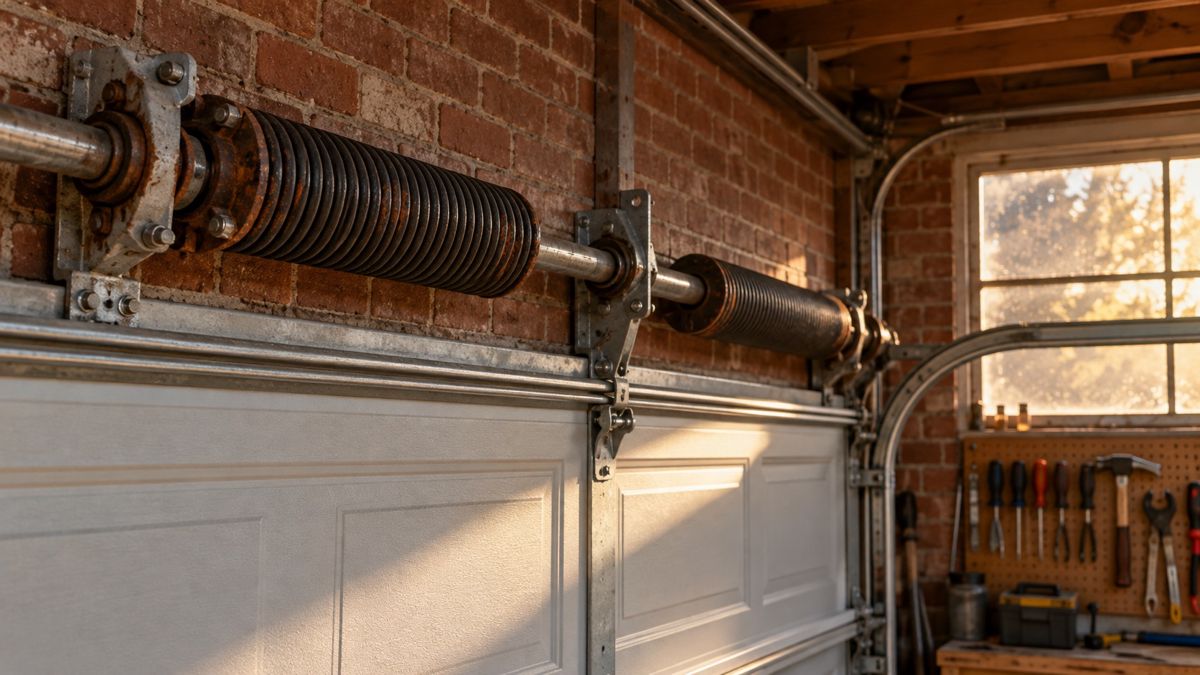
If your garage door spring has broken, the short answer is this: do not replace it yourself. The spring holds a huge amount of stored force, the parts are easy to mismatch, and a small slip can send a steel winding bar through the air. Stop using the door, keep people clear of it, and have a trained technician handle the repair.
That advice can feel overcautious when a video makes the job look like twenty minutes of work. This article explains what the spring actually does, why home attempts go wrong, and what a safe visit looks like for a St. Louis home.
What does a garage door spring actually do?
A garage door is heavy. A standard two-car steel door can weigh well over a hundred pounds, and an insulated or wood-look door weighs more. Your opener is not built to lift that weight. The springs are. They are wound tight, and as the door goes up they release that stored force to carry most of the load. When the door comes down they wind back up.
A properly balanced door feels almost weightless when you lift it by hand with the opener disconnected. That balance depends on the spring being the right size for the door, wound to the right tension, and in good condition. Every one of those details matters.
Springs also have a limited life. Each trip up and down counts as one cycle, and a spring is rated for a set number of cycles. A household that parks in the garage and uses the door several times a day will wear through a spring sooner than one that uses it once.
Why is replacing a garage door spring so dangerous?
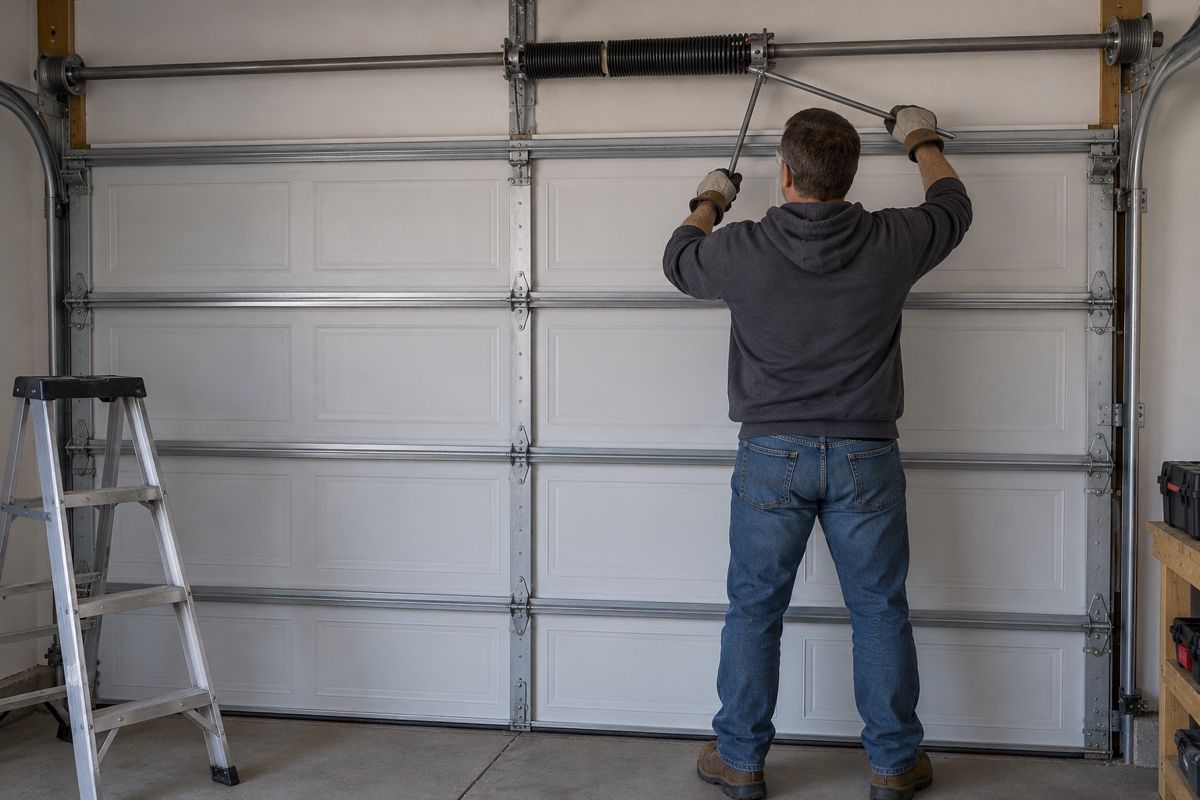
Most residential doors use torsion springs, which sit on a shaft above the door opening. To replace one, the old spring must be unwound, removed, and a new one wound back to full tension. The winding is done in small steps with two steel bars that slide into holes in a winding cone.
The danger is the stored energy. If a bar slips out of the cone, or a set screw gives way, the spring can unwind in an instant. The bar can swing or fly with enough force to break bones or cause a head injury. Injuries like these are well documented, and they usually involve people working with the wrong tools or without training.
- The force is released suddenly, with no warning.
- You are working at head height, often from a ladder.
- A door that is only partly supported can fall while you work.
- There is no easy way to tell how tight is tight enough without experience.
None of this is about being clumsy. It is about a job where one small error has a severe cost.
What goes wrong when people try it anyway?
The first problem is the spring itself. Springs are matched to the door by weight, height, and the size of the drum that the cable winds around. A spring from a hardware store shelf looks similar but may be wrong by a few pounds of lift. A mismatched spring leaves the door too heavy or too light. A door that is too heavy burns out the opener. A door that is too light can shoot upward and slam.
The second problem is the tools. Screwdrivers and adjustable wrenches are not winding bars. People who use them lose their grip, and the bar goes where the spring sends it. Proper winding bars are cheap, but they are only a small part of the picture.
The third problem is everything around the spring. A broken spring often leaves frayed cables, a bent shaft, worn bearings or cracked drums. Someone who swaps only the spring may miss the part that fails next week. If the cables are loose or the door is crooked when the new spring is wound, the tension can end up uneven and the door can jam in the track.
Are extension springs any safer to replace?
Some older homes, including many of the brick bungalows with detached garages in south St. Louis, still have extension springs. These run along both sides of the door, parallel to the horizontal track, rather than across the top.
They are not safer. Extension springs stretch under load, and when one breaks it can whip across the garage. Safety cables are meant to run through them to contain a break, but many older garages have lost or never had them. Releasing the tension before removing an extension spring is its own risk, because the door must be supported first.
Treat both types the same way. Do not touch the springs, the cables, or the brackets at the bottom corners of the door. All of those parts hold tension and can hurt you.
How does St. Louis weather affect garage door springs?
Springs are steel, and steel reacts to the weather. St. Louis summers are hot and humid, and that moisture speeds up surface rust on the coils. Rust roughens the metal, makes the spring bind against itself, and weakens it over time. Winters bring hard freezes and swings between cold nights and milder days. Cold makes old grease stiff, and a spring that has been wearing for some time may finally give way on a cold morning when the door gets used.
Detached garages off an alley see a few more cycles than you might expect, because the door is the main way in and out for the car, the trash cans and the garden tools. Attached garages in suburbs such as Kirkwood or Webster Groves see steady daily use as well.
A yearly look at the springs for rust, gaps in the coil, or uneven wear is worth doing from the floor, with the door closed. If something looks off, call a technician rather than adjusting anything. Keeping the door lubricated and balanced helps, but it will not make a spring last forever.
What does a safe spring replacement look like?
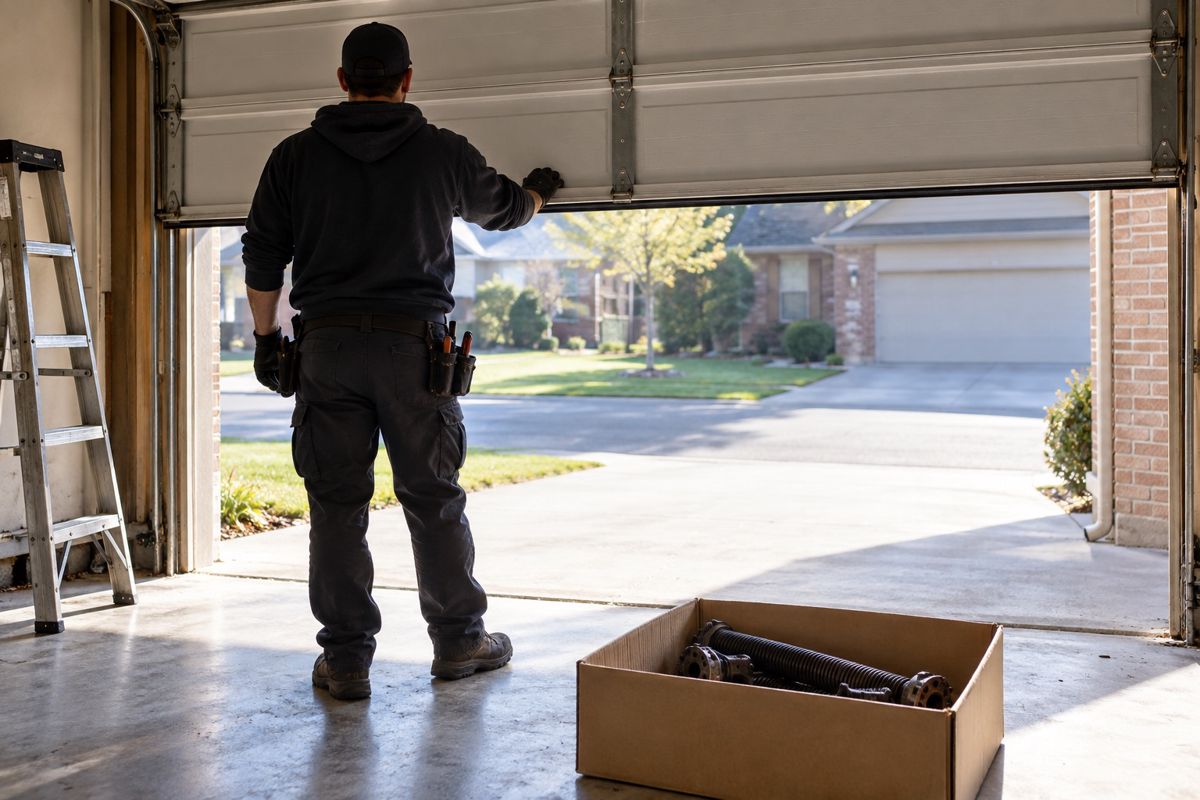
A trained technician starts by checking the door's weight and size so the new spring is matched correctly. They secure the door so it cannot move, release the broken spring in a controlled way, and install the new one. They wind it with proper bars, set it to the right tension, and then test the balance by lifting the door by hand and watching it travel through its full range.
Good technicians also look at the rest of the system, including cables, drums, rollers, bearings and the opener's behaviour under the new balance. When you call, a few questions are worth asking:
- Will you give me a written quote before starting work?
- Will the old and new springs be matched to my door's actual weight?
- Should both springs be replaced, or only the broken one?
- Are any other worn parts showing, and what would they add to the quote?
It is also fair to ask to see a contractor's licence and insurance before you hire anyone, as the rules vary between the city, the county and individual municipalities.
What should you do right now if a spring has broken?
Stop pressing the wall button. Do not try to force the door up. If the door is stuck open, keep cars and people out from under it. If it is closed, leave it closed and park outside for now. Then call a technician who can match and wind the spring safely.
You can read more about how the work goes on our garage door spring repair page, and if cables or tracks were damaged as the spring failed, our cable and track repair page explains that side. A broken spring is a repair that costs far less than a hospital visit.